What a Married Priest Taught Me About Love
Yes, you heard me correctly.
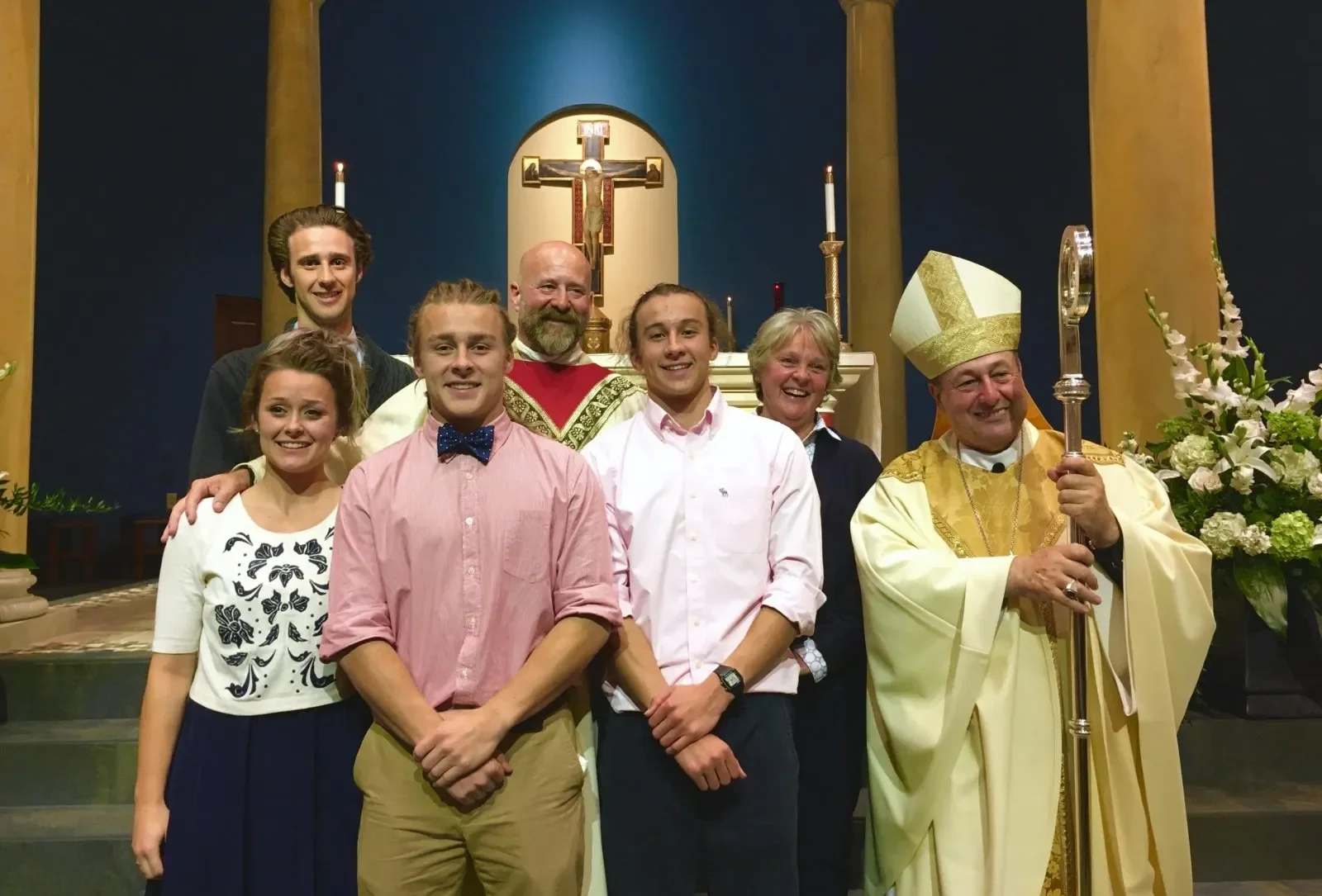
The Longenecker Family (From Standing on My Head).
To your typical non-Christian or street-level Catholic/Christian, the mention of married priests suffices to raise eyebrows and elicit surprised responses.
And it’s understandable. Because the dominant expression of Catholicism is the Roman (Latin) Church, it’s common knowledge that Catholic priests are, by convention, celibate.
Hence, the term “married priest” comes across as an oxymoron in most people’s minds. You can’t be married and be a priest simultaneously, so it seems.
That being said, the reality is that it’s far from dogma that marriage and priesthood are mutually exclusive.
Never was.
There is Biblical precedent for the ordaining of married men to the presbyterate (see 1 Tim 3:2 and Titus 1:6–9). And to this day, the Eastern Catholic Churches retain this practice.
In a Nutshell — Eastern Catholicism
For the uninitiated, Eastern Catholics are Catholic Christians typically from Eastern European and Middle Eastern lands since the time the 12 Apostles preached the Gospel and established churches in their cities, such as Ephesus, Cyprus, Antioch, and Alexandria (Read more).
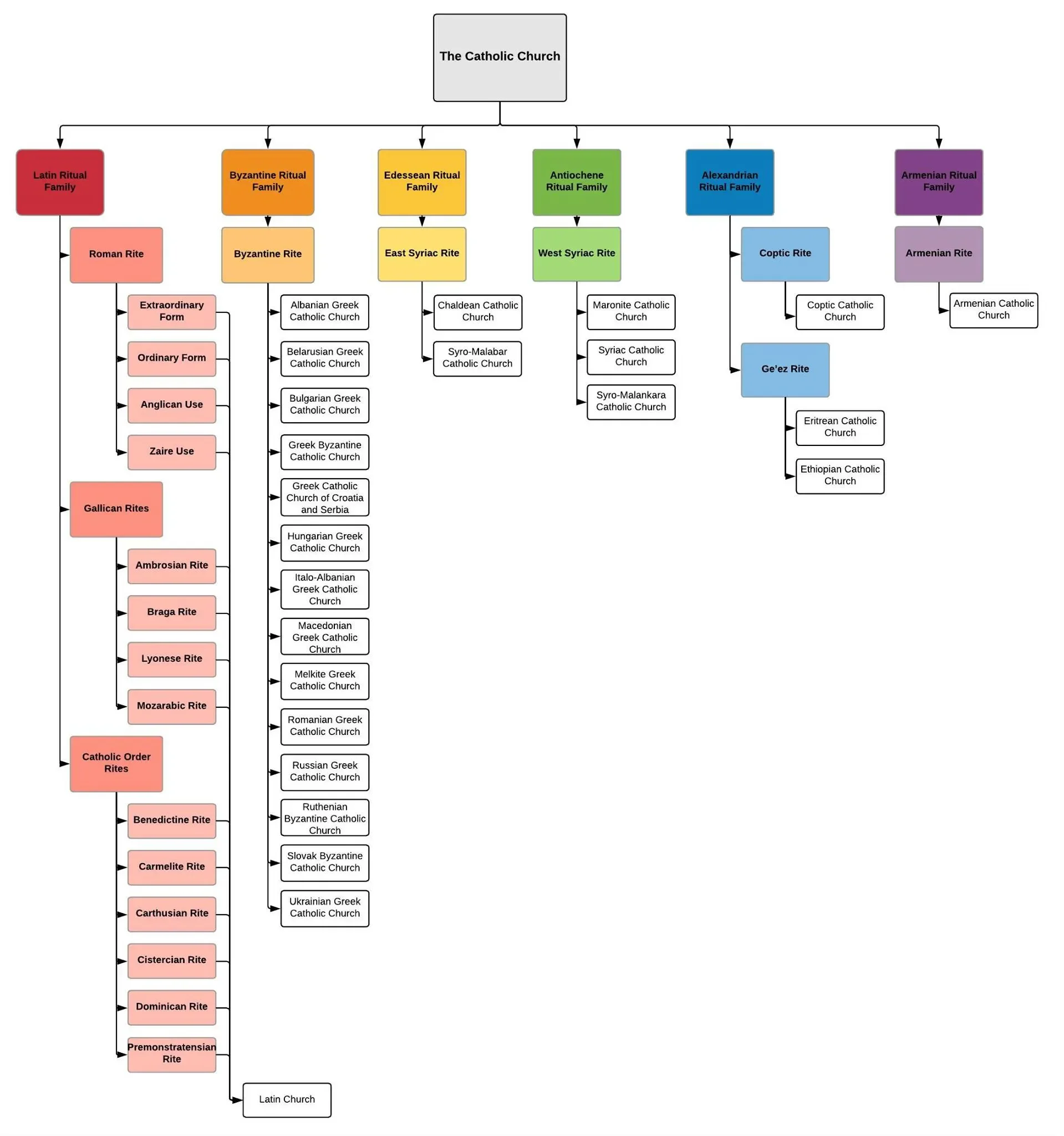
Catholic Family Tree (Source).
Their particular cultures inform their expression of faith and worship in the Divine Liturgy (the Mass in their lingo), giving rise to distinct Eastern rites within the Catholic Church, separate from the Latin rite.
Some of their unique customs include the use of leavened bread for the Eucharist, communion under both species (the Body and Blood of Christ), the veneration of icons, stricter fasting rules, and the ordination of married men to the priesthood and diaconate (Read more).
While they possess autonomy in governance and diversity in discipline, they are subject to the Pope’s spiritual authority in dogmatic matters of faith and morals (see UGCC Catechism 291). Thus, Eastern Catholics are true Catholics by virtue of their communion with the Successor of St Peter, common ecclesial structures, and shared dogmas as handed down from the Apostles.
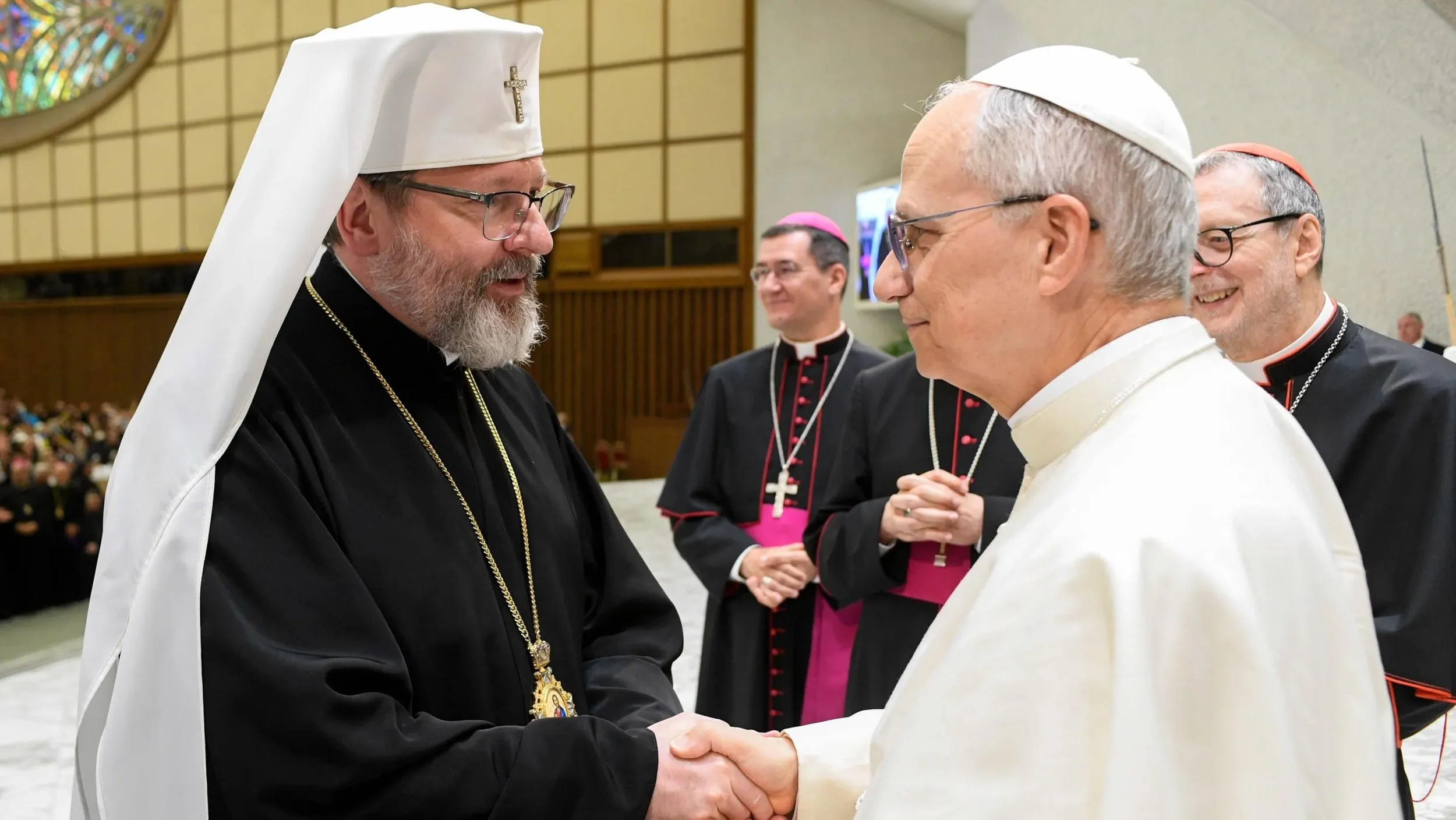
Photo: Pope Leo XIV greets Patriarch Sviatoslav Shevchuk of the Ukrainian Greek Catholic Church (May 14, 2025).
Married Priesthood
While the ordination of married men as priests is commonplace in Eastern Catholic churches, it should be noted, however, that priests are not permitted to marry post-ordination.
Men who are already married may be ordained as priests, provided they have proven capable of managing their marriages and raising their kids well.
For both the Latin and Eastern Churches alike.
As for the Latin Church, however, over time, certain political, theological, and other developments have led to the universal implementation of priestly celibacy as an ecclesial discipline.
Long story short, the Roman Catholic Church discerned that single men were ideally suited to serve in ministry and reflect the union of Christ and His Church (see 1 Cor 7:32–35, Matt 19:12).
Concerning the Eastern Catholic Churches, bishops, major archbishops (aka patriarchs), and Eastern-elected cardinals are celibate, as in the Latin Church, because they are considered to possess the fullness of Holy Orders—overseeing multiple parishes, administratively and spiritually, within their dioceses/eparchies.
Ergo, candidates for ordination to the episcopate are often selected from monasteries and religious orders. Hence, it’s not uncommon for Eastern Catholic bishops to be hieromonks (i.e., priest-monks).
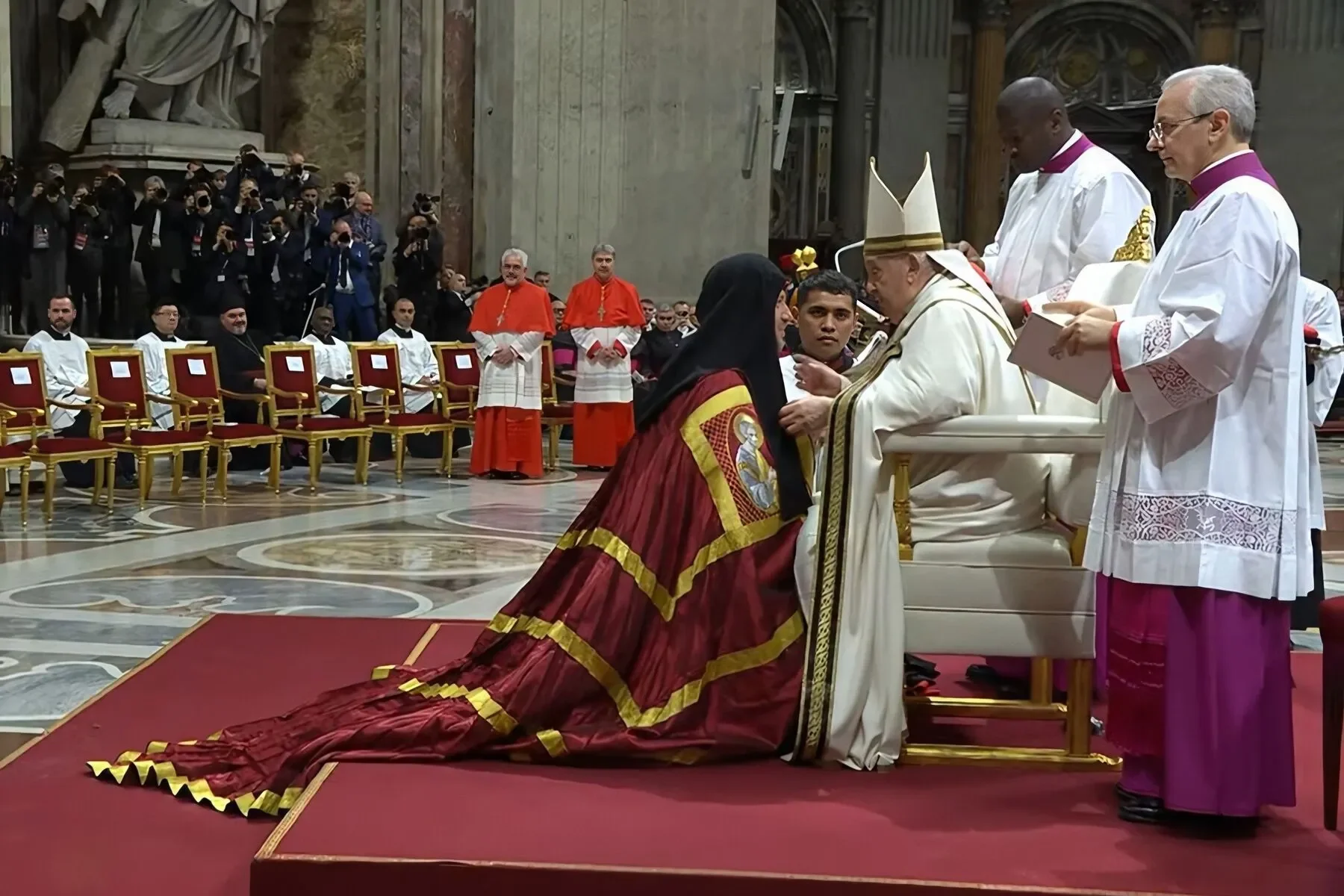
Photo: Cardinal Mykola Bychok (Source).
Since the reforms of Vatican II, married men have been ordained as permanent deacons and, on a discretionary basis, to the priesthood under the Pastoral Provision in the Latin Church.
Case in point: Fr Dwight Longenecker (from an Anglican minister to a Catholic priest).
Nevertheless, single men remain the preferred choice for ordination as a rule (and for good reason).
Likewise, married priests and deacons cannot become bishops. And if widowed, cannot remarry — again following 1 Cor 7:32–35.
Meeting a Married Priest
While living in Australia, this author made time to explore the treasures of the Catholic Church.
Well, mostly frequenting Divine Liturgies — primarily at Byzantine parishes under the eparchies (the equivalent of an Archdiocese) of the Ukrainian, Russian, and Melkite Greek Catholic Churches.
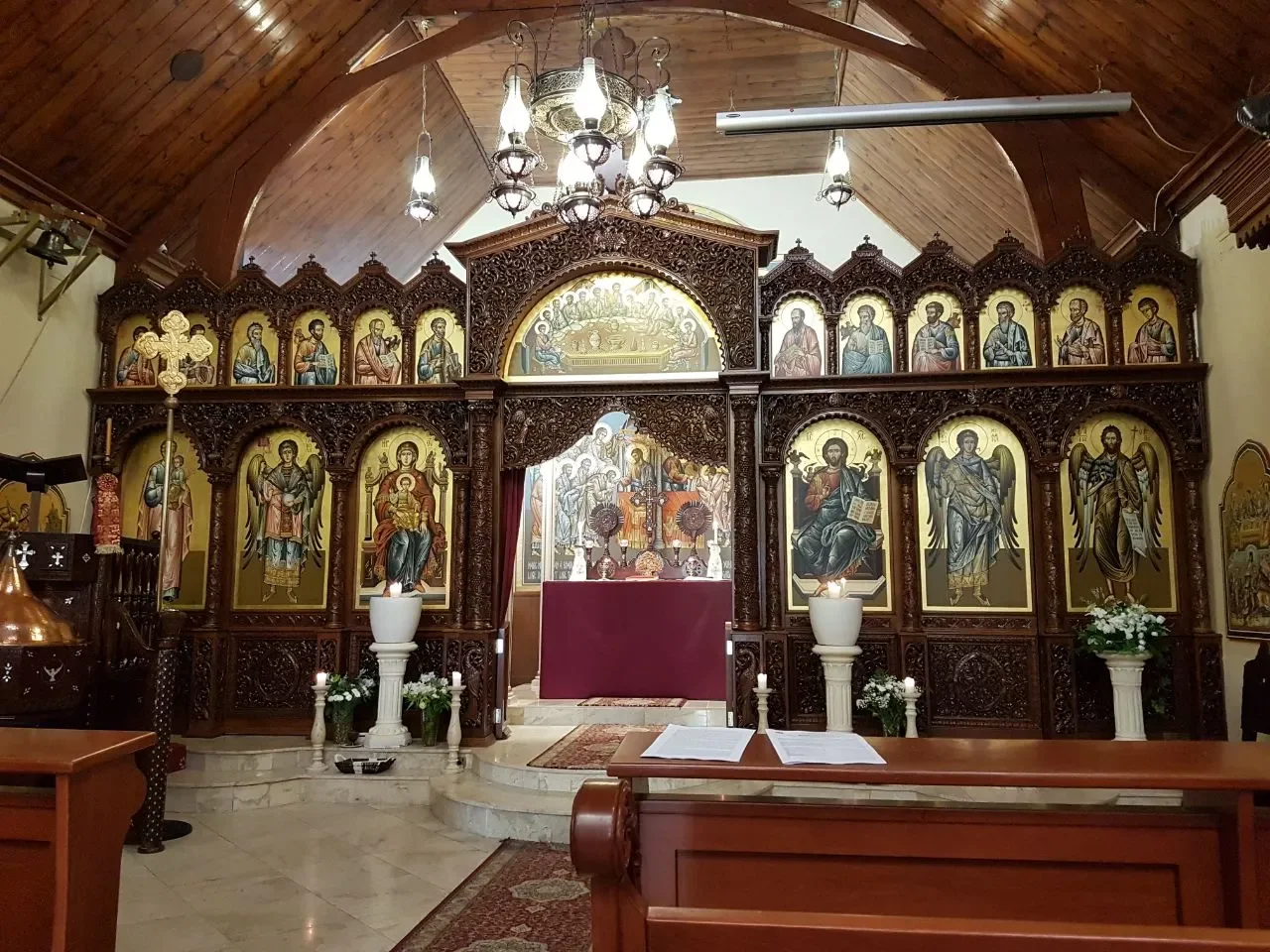
Photo: Iconostasis taken by Author.
Along the way, I met several married presbyters and their families. Some have bi-ritual faculties — meaning they can celebrate both Divine Liturgy and the Mass. And others have wives who sing in the choir, facilitating worship during the liturgy.
Some earn a living by writing, teaching, prison ministry, or in other secular professions.
One I befriended, I learnt more about Byzantine spirituality and had the opportunity to help him with housecleaning and move furniture at his humble home.
Stepping into his house had been eye-opening.
It dawned on me how rigorous it was to juggle dual* vocations and serve in persona Christi consistently in these two worlds.
*Though from the perspective of a married priest, his biological family subsists in his wider vocation as a spiritual father.
My priest friend gave me the best advice. He said:
“My robes and vestments are not a costume that I wear whenever I am in the parish. Even though I take them off and keep them in my wardrobe at home, I still wear them from the inside.
When my young son wants me to play with him or read a bedtime story, I can’t just turn him down. I have to be present for him, though there are many times I want to lie on the couch with my feet up after a long day of work and ministering the sacraments.
Likewise, when my wife wants me to do the dishes and hang the laundry, I have to help her. It’s on me to take initiative in co-leading the domestic church, as signified by the crowns that we wore on our wedding day.
There are no hacks — just a daily conscious decision to commit to willing the good of the other.”
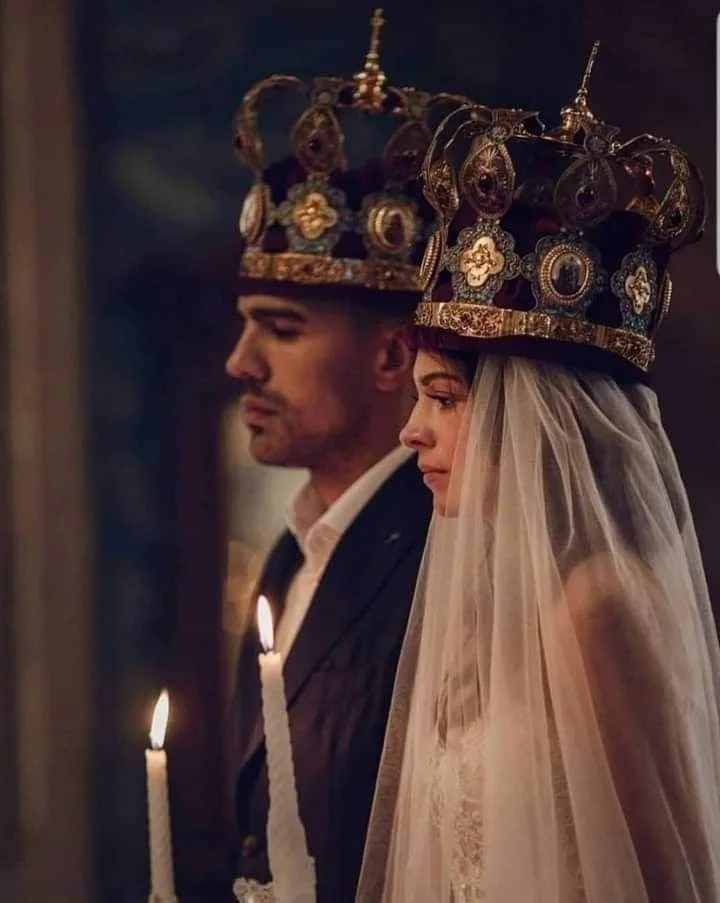
Photo: Byzantine Wedding (Source).
The Stakes of Dual Vocations
Indeed, to simultaneously earn an income to sustain the family, pay the bills, and serve in sacramental ministry, which can often intrude on your personal time — like having to anoint a seriously ill or dying parishioner at unorthodox hours — and yet show up for your wife and children in their formative years and milestones, that takes significant personal responsibility and time management.
And for a wife to prayerfully support her husband’s spiritual calling, share the scrutiny of the spotlight, and, from time to time, possibly serve as an ‘intermediary’ for him — that takes considerable fortitude.
The clerical family, done right, models to parishioners responsibility, joyful selfless service, and monogamous fidelity with unique depth.
Yet, it could cut both ways. Things can go south.
It is, without doubt, an easy temptation to adopt a pious persona and become a different person behind closed doors, not necessarily in a malicious sense. But through perpetual immaturity, laxity, and mediocrity.
And that leaves an impact, insidious as much as it is conspicuous and cumulative.
A man can drift into self-indulgence or simply leave family life running on autopilot, growing increasingly disconnected from familial dynamics and emerging issues steadily taking root.
He may unwittingly leave his wife emotionally neglected and sabotage their children’s personal education and spiritual formation, through a scarce prayer life, unchecked authoritarian behaviours, and an absence of responsibility-taking for his own emotions and the rectification of relationship tensions (see Eph 6:4).
Such negligence can render children susceptible to adopting warped morals and dysfunctional relationship patterns, and becoming hardened toward spiritual realities in their existential outlook.

“Do not conform yourselves to the standards of this world, but let God transform you inwardly by a complete change of your mind. Then you will be able to know the will of God — what is good and is pleasing to him and is perfect.” — Romans 12:2.
If a regular father can inflict this much damage by being irresponsible, how much more an ordained spiritual father — one who bears the indelible mark of Christ, bound to embody His Eucharistic Sacrifice deeply in his very soul?
Especially so when one occupies himself in ministry to the neglect of his family life, woefully misrepresenting the heart of Christ to his wife and becoming a stumbling block to his children and, by extension, the parish community.
What a man does behind closed doors (or lack thereof) will show itself through the cracks in his persona and in the impact left on the souls entrusted to his care, biological and spiritual alike.
Concluding Reflections
Meeting capable married priests has been a blessing.
Their words of wisdom, which carry a great deal of substantive, experiential weight, have been instructive in instilling in young males, addicted to comfort and convenience, and those figuring out their lives, relationships, and their callings, what it means to man up.

It takes two regenerated, responsible individuals for love to flourish (Source).
So to the married priests I’ve met, either online as a Donor Subscriber, or in the flesh, from whom I received communion under both kinds, thank you for teaching this author, through your witness, what living with intention entails.
To pay attention to the “little things”. To be faithful in the small.
Tremendous respect I have for how you exercise your vocations such that your spiritual fatherhood nurtures your marriage and parenthood, which in turn enlightens your priesthood in a positive, complementary feedback loop.
A man owes it to himself and the people he loves to live with initiative and to awaken from the unconscious — operating on autopilot — by opening himself to be infused with the righteousness of God daily.
This is The Way to authentic fulfilment and an abundant life.
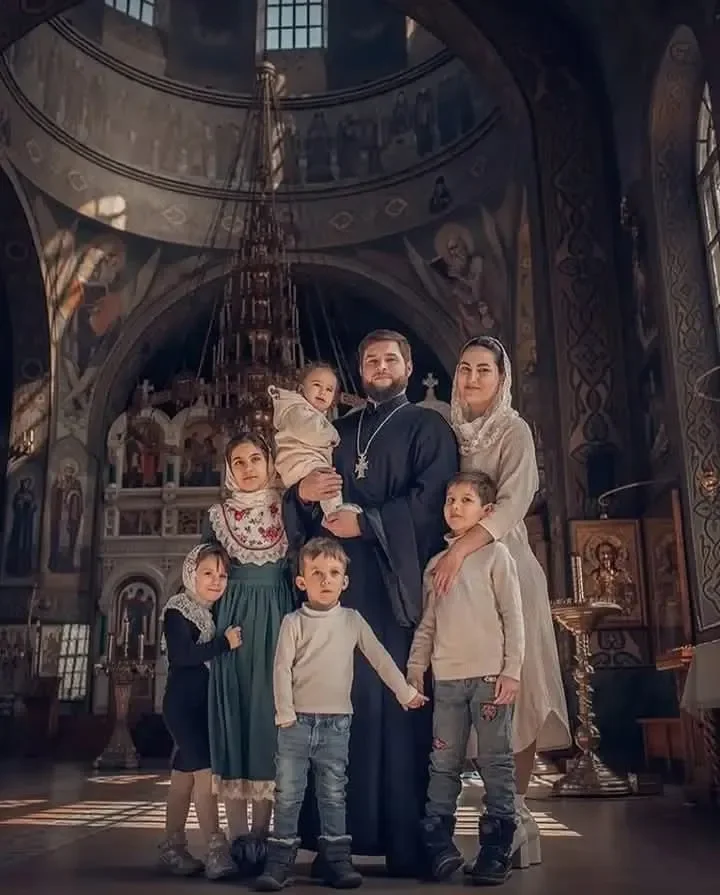
“Now an overseer must be above reproach, married only once, temperate, self-controlled, respectable, hospitable, an apt teacher, not a drunkard, not violent but gentle, not quarrelsome, and not a lover of money. He must manage his own household well, keeping his children submissive and respectful in every way, for if someone does not know how to manage his own household, how can he take care of God’s church?” — 1 Timothy 3: 2–5.
May the Lord bless our married clerics (presbyters and deacons) and strengthen them in their embodiment of the Eucharistic Sacrifice and simultaneous commitment to prioritizing responsible familial love first.