Do Not Defer Your Conversion
The considerations offered in the preceding chapters should be more than sufficient to excite men to the love and practice of virtue. However, sinners never seem to be in want of excuses to defend their loose lives. “A sinful man,” says the Scripture, “will flee reproof, and will find an excuse according to his will.”
“He that has a mind to depart from a friend seeks occasions.” Thus, the wicked, who flee reproach, who wish to withdraw from God, are never without an excuse. Some defer this important affair of salvation to an indefinite future; others till the hour of death. Many allege that it is too difficult and arduous an undertaking. Many presume upon God’s mercy, persuading themselves that they can be saved by faith and hope without charity. Others, in fine, who are enslaved by the pleasures of the world, are unwilling to sacrifice them for the happiness which God promises.
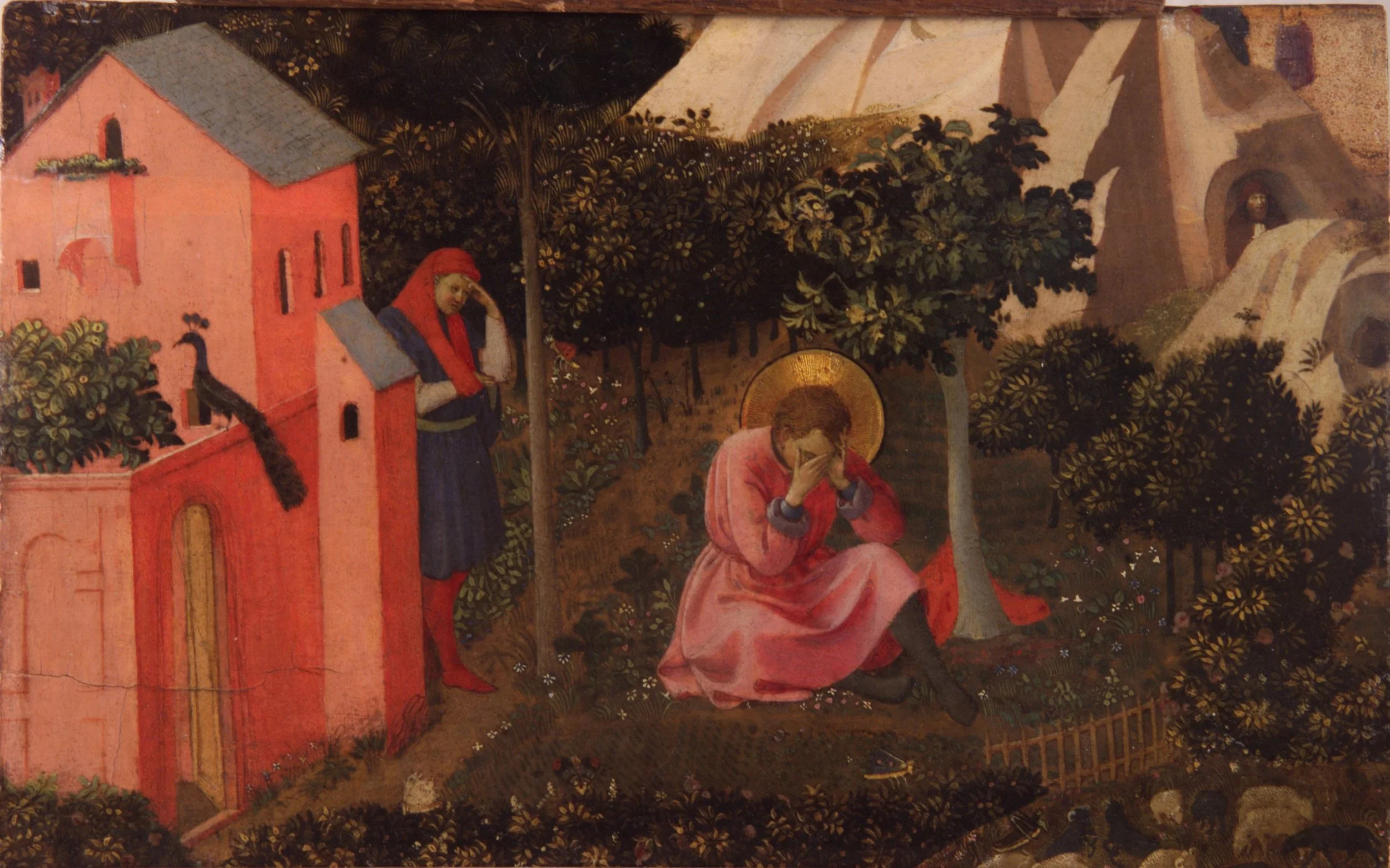
These are the snares most frequently employed by Satan to allure men to sin, and to keep them in its bondage until death surprises them. At present, we intend to answer those who defer their conversion, alleging that they can turn to God more efficaciously at another time. With this excuse was St. Augustine kept back from a virtuous life. “Later, Lord,” he cried “later I will abandon the world and sin.”
It will not be difficult to prove that this is a ruse of the father of lies, whose office since the beginning of the world has been to deceive man. We know with certainty that there is nothing which a Christian should desire more earnestly than salvation. It is equally certain that to obtain it the sinner must change his life, since there is no other possible means of salvation.
Therefore, all that remains for us is to decide when this amendment should begin.
You say, at a future day. I answer, at this present moment. You urge that later it will be easier. I insist that it will be easier now. Let us see which of us is right. Before we speak of the facility of conversion, tell me who has assured you that you will live to the time you have appointed for your amendment. Do you not know how many have been deceived by this hope?
St. Gregory tells us that:
“God promises to receive the repentant sinner when he returns to Him, but nowhere does He promise to give him tomorrow.”
St. Caesarius thus expresses the same thought:
“Some say, in my old age I will have recourse to penance; but how can you promise yourself an old age, when your frail life cannot count with security upon one day?”
I cannot but think that the number of souls lost in this war is infinite. It was the cause of the ruin of the rich man in the Gospel, whose terrible history is related by St. Luke:
“The land of a certain rich man brought forth plenty of fruits; and he thought within himself, saying: What shall I do, because I have no room where to bestow my fruits? And he said: This will I do: I will pull down my barns, and will build greater, and into them will I gather all things that are grown to me, and my goods; and I will say to my soul: Soul, you have much goods laid up for many years; take your rest, eat, drink, make good cheer. But God said to him: You fool, this night do they require your soul of you; and whose shall those things be which you have provided?”
What greater folly than thus to dispose of the future, as if time were our own! “God,” says St. John, “holds the keys of life and death.” Yet a miserable worm of the earth dares usurp this power. Such insolence merits the punishment which the sinner usually receives. Rejecting the opportunity God gives him for amendment, he is denied the time he has presumptuously chosen for penance, and thus miserably perishes in his sins. Since the number who are thus chastised is very great, let us profit by their misfortunes and heed the counsel of the Wise Man: “Delay not to be converted to the Lord, and defer it not from day to day. For His wrath shall come on a sudden, and in the time of vengeance He will destroy you.” But, even granting that you will live as long as you imagine, will it be easier to begin your conversion now or some years hence?
To make this point clear we shall give a brief summary of the causes which render a sincere conversion difficult.
(1) The first of these causes is the tyranny of bad habits.
So strong are these that many would die rather than relinquish them. Hence, St. Jerome declares that a long habit of sin robs virtue of all its sweetness. For habit becomes second nature, and to overcome it we must conquer nature itself, which is the greatest victory a man can achieve. “When a vice is confirmed by habit,” says St. Bernard, “it cannot be extirpated except by a very special and even miraculous grace.” Therefore, there is nothing which a Christian should dread more than a habit of vice, because, like other things in this world, vice claims prescription, and once that is established it is almost impossible to root it out.
(2) A second cause of this difficulty is the absolute power which the devil has over a soul in sin.
He is then the strongly-armed man mentioned in the Gospel, who does not easily relinquish what he has acquired. Another cause of this difficulty is the separation which sin makes between God and the soul. Though represented in Scripture as a sentinel guarding the walls of Jerusalem, God withdraws farther and farther from a sinful soul, in proportion as her vices increase. We can learn the deplorable condition into which this separation plunges the soul from God Himself, Who exclaims by His prophet: “Woe to them, for they have departed from Me. Woe to them when I shall depart from them.” This abandonment by God is the second woe of which St. John speaks in the Apocalypse.
(3) The last cause of this difficulty is the corruption of sin, which weakens and impairs the faculties of the soul, not in themselves, but in their operations and effects.
Sin darkens the understanding, excites the sensual appetites, and, though leaving it free, so weakens the will that it is unable to govern us. Being the instruments of the soul, what but trouble and disorder can be expected from these faculties in their weak and helpless state? How, then, can you think that your conversion will be easier in the future, since every day increases the obstacles you now dread, and weakens the forces with which you must combat them? If you cannot ford the present stream, how will you pass through it when it will have swollen to an angry torrent? Perhaps you are now a prey to a dozen vices, which you tremble to attack. With what courage, but especially with what success, will you attack them when they will have increased a hundred-fold in numbers and power? If you are now baffled by a year or two of sinful habits, how can you resist their strength at the end of ten years? Do you not see that this is a snare of the archenemy, who deceived our first parents, and who is continually seeking to deceive us also? Can you, then, doubt that you only increase the difficulties of your conversion by deferring it? Do you think that the more numerous your crimes the easier it will be to obtain a pardon? Do you think that it will be easier to effect a cure when the disease will have become chronic?
“A long sickness is troublesome to the physician, but a short one”- that is, one which is taken in the beginning - “is easily cut off.” Hear how an Angel disabused a holy solitary of an illusion like yours: Taking him by the hand, he led him into a field and showed him a man gathering fagots. Finding the bundle he had collected too heavy, the woodcutter began to add to it; and perceiving that he was still less able to lift it, he continued to add to the quantity, imagining that he would thus carry it more easily. The holy man wondering at what he saw, the Angel said to him: Such is the folly of men, who, unable to remove the present burden of their sins, continue to add to it sin after sin, foolishly supposing that they will more easily lift a heavier burden in the future.
But among all these obstacles the greatest is the tyranny of evil habits.
Would that I could make you understand the power with which they bind us! As each blow of the hammer drives a nail farther and farther into the wood, until it can hardly be withdrawn, so every sinful action is a "fresh blow which sinks vices deeper and deeper into our souls until it is almost impossible to uproot them. Thus it is not rare to see the sinner in his old age a prey to vices which have dishonored his youth, in which he is no longer capable of finding pleasure, and which his years and the weakness of nature would repel, were he not bound to them by long-continued habit. Are we not told in Scripture that “the bones of the sinner shall be filled with the vices of his youth, and that they shall sleep with him in the dust?”
Thus we see that even death does not terminate the habit of vice; its terrible effects pass into eternity. It becomes a second nature, and is so imprinted in his flesh that it consumes him like a fatal poison for which there is scarcely any remedy. This our Savior teaches us in the resurrection of Lazarus. He had raised other dead persons by a single word, but to restore Lazarus, who had been four days in the tomb, He had recourse to tears and prayers, to show us the miracle God effects when he raises to the life of grace a soul buried in a habit of sin. For, according to St. Augustine, the first of these four days represents the pleasure of sin; the second, the consent; the third, the act; and the fourth, the habit of sin. Therefore, the sinner who has reached this fourth day can only be restored to life by the tears and prayers of our Saviour.
But let us suppose that you will not be disappointed, that you will live to do penance. Think of the inestimable treasures you are now losing and how bitterly you will regret them when too late. While your fellow-Christians are enriching themselves for Heaven, you are idling away your time in the childish follies of the world. Besides this, think of the evil you are accumulating. We should not, says St. Augustine, commit one venial sin even to gain the whole world. How, then, can you so carelessly heap up mortal sins, when the salvation of a thousand worlds would not justify one? How dare you offend with impunity Him at Whose feet you must kneel for mercy, in Whose hands lies your eternal destiny?
Taken from The Sinner’s Guide by Venerable Louis of Granada, O.P., Chapter 24: The Folly of those who Defer their Conversion.