Behold the Lamb of God, who takes away the sins of the world
(Reflection for the 2nd Sunday of Ordinary Time year A)
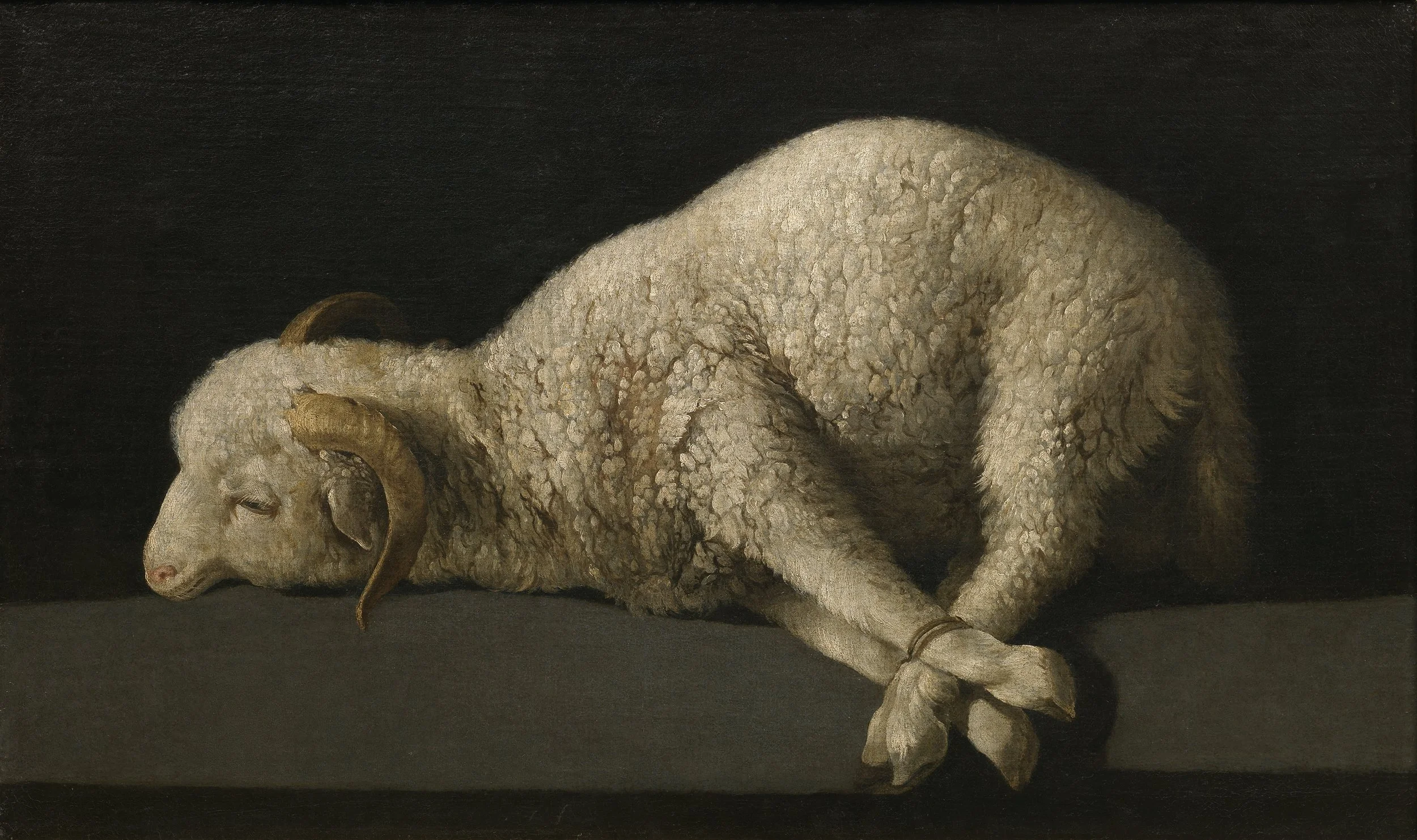
Agnus Dei c. 1635–1640, by Francisco de Zurbarán, Prado Museum
It is a phrase thoroughly familiar to Catholics.
We hear it at Mass just before Holy Communion.
The Priest raises the broken host above the chalice and says, “Behold the Lamb of God who takes away the sins of the world. Blessed are those called to the supper of the Lamb.”
And Catholics reply, “Lord, I am not worthy that you should come under my roof, but only say the word and my soul shall be healed.”
And like clockwork, prepare to receive Holy Communion.
For the 2nd Sunday of the year, the Church says “pause, and ponder. For you may not know the full weight of what you are saying.”
And offers homilists the opportunity to unpack this phrase first uttered by the person of John the Baptist, for our consideration.
One preacher who was certainly not afraid to unpack what this means was the Servant of God Bishop Dom Helder Camara of the diocese of Olinda and Recife.
He described the dramatic situation of his country in the following manner.
“When I give food to the poor, they call me a saint. When I ask why they are poor, they call me a communist.”[1]
Bishop Camara describes a situation where sin is so radical that it is not simply the occasional lapse of weak individuals.
Rather, it has seeped into the culture.
“Why are people poor?”
This was not supposed to be a subversive question.
But an inquiry borne out of compassion and a desire to solve problems.
The over-the-top response, “you must be a communist” becomes telling.
This is a culture designed to be oppressive.
It is more than happy if people address the symptoms.
But if you ever dare inquire into the root causes, then watch out.
It will come crashing down on you.
And that is precisely the “sin of the world.”
Echoing Bishop Camara, the Catechism of the Catholic Church teaches that
This expression can also refer to the negative influence exerted on people by communal situations and social structures that are the fruit of men's sins. (CCC 408)
Sin always starts with the personal. But it can reach a state where communities and social structures are complicit. Hence, people go along with it because “everyone is doing it.”
For John the Baptist, radical evil can only be defeated by radical love — the love that does not run from suffering but enters it.
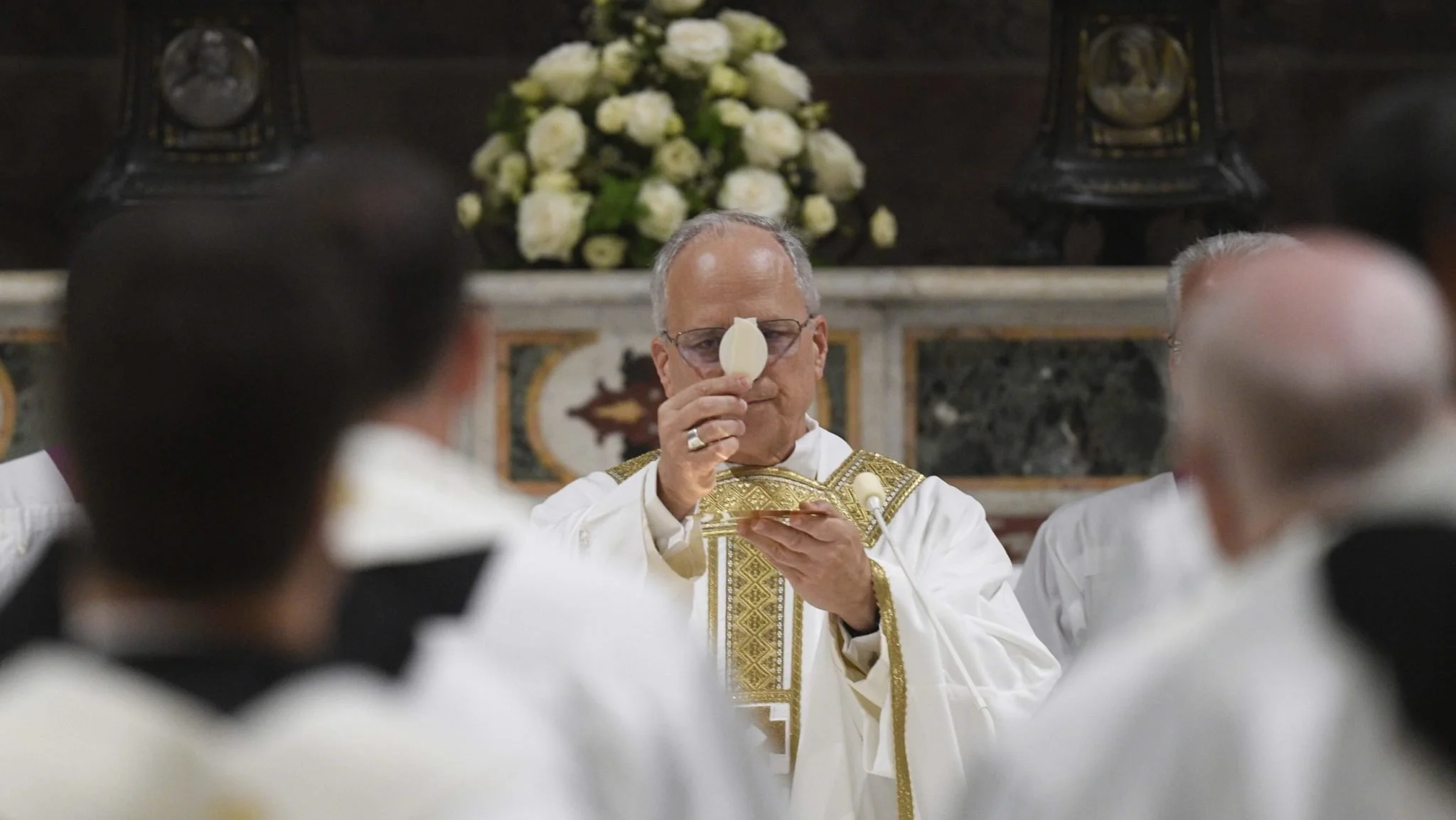
Pope Leo XIV elevates the host as he celebrates his first Mass as pope with the cardinals who elected him in the Sistine Chapel at the Vatican May 9, 2025. (CNS photo/Vatican Media)
The “Lamb of God” who “takes away the sin of the world”.
When faced with the one who loves radically, and conscious of our own sinfulness, the only correct response is the one provided for by the Church
First, a confession of our sinful capacity and unworthiness.
“Lord, I am not worthy that you should enter under my roof.”
And then, a plea, for radical healing.
“But only say the word, and my soul shall be healed.”
And when we go up for holy communion, we are then united to Christ himself, radical love made flesh.
This radical healing, because of this Holy Communion, would be the “grace and peace” sent by God our Father and the Lord Jesus Christ, described by Paul in the second reading.
Yet this communion is never simply meant for our personal healing.
The first reading from the prophet Isaiah reminds Israel that God did not save Israel simply for itself.
‘It is not enough for you to be my servant,
to restore the tribes of Jacob and bring back the survivors of Israel;
I will make you the light of the nations
so that my salvation may reach to the ends of the earth.’ (Isaiah 49:6)
If Christians are aware of both the radical nature of evil and the radical love offered by Jesus Christ, they are obliged then to enlighten others.
The Catechism teaches this in no uncertain terms of the societal implications when this is forgotten.
Ignorance of the fact that man has a wounded nature inclined to evil gives rise to serious errors in the areas of education, politics, social action and morals. (CCC 407)
Light, when shone into a dark place, awakens. Once awakened, it must necessarily lead to action.
If it does not, then the shining of the light would have been futile.
What test do we have, to see if our reception of Holy communion is bearing fruit?
The answer is found in the responsorial psalm.
Can we say with the Psalmist
“My God, I delight in your law in the depth of my heart.”
The law of God, always a duty, is nevertheless also a deep source of delight. Our hearts are awakened even if it is difficult.
And can we then, after finding our delight, then proceed to action
“Here I am Lord, I come to do your will”
How this would look like would depend on our concrete situation.
For Saint Oscar Romero, it led to his transformation from cautious bureaucrat to a prophetic voice for the voiceless.
And his martyrdom while celebrating Mass.[2]
For Saint Teresa of Calcutta, it led her to serve the poorest of the poor in the slums of India.
And for her sisters and herself to place the Holy Mass and two hours in adoration of the Eucharist daily, at the centre of their spiritual lives.
“The Eucharist and the poor are inseparable,” she said. “The One who said, ‘This is my body’ is the same one who said, ‘I was hungry, and you gave me to eat’”.[3]
In this second Sunday of ordinary time, we may not always feel it daily, but if we are honest, the Church’s reminder our ordinary lives are marked by a story of “dour combat with the powers of evil.” (CCC 409) rings true.
But when we are united with radical love, this combat is the ordinary means of transforming the world.
What it would look like may not be as dramatic as that of Saints Teresa and Oscar.
But it is no less important.
And radical.
For as Saint Teresa teaches,
“And if we really believe, we will begin to love. And if we love, naturally, we will try to do something. First in our own home, our next-door neighbour, in the country we live in, in the whole world.”[4]
[1] https://uscatholic.org/articles/202010/archbishop-helder-camara-the-peoples-pastor-shows-us-another-way-to-live/
[2] https://www.vaticannews.va/en/saints/03/24/st--oscar-romero--martyr.html
[3] https://www.ncregister.com/commentaries/eucharistic-life-of-mother-teresa
[4] https://jerseycatholic.org/what-mother-teresa-actually-said-about-home