I Saw the Sign that Opened up My Eyes
Reflection for the 4th Sunday of Advent Year A
Such are the men who seek him, seek the face of the God of Jacob. – Psalm 23:6
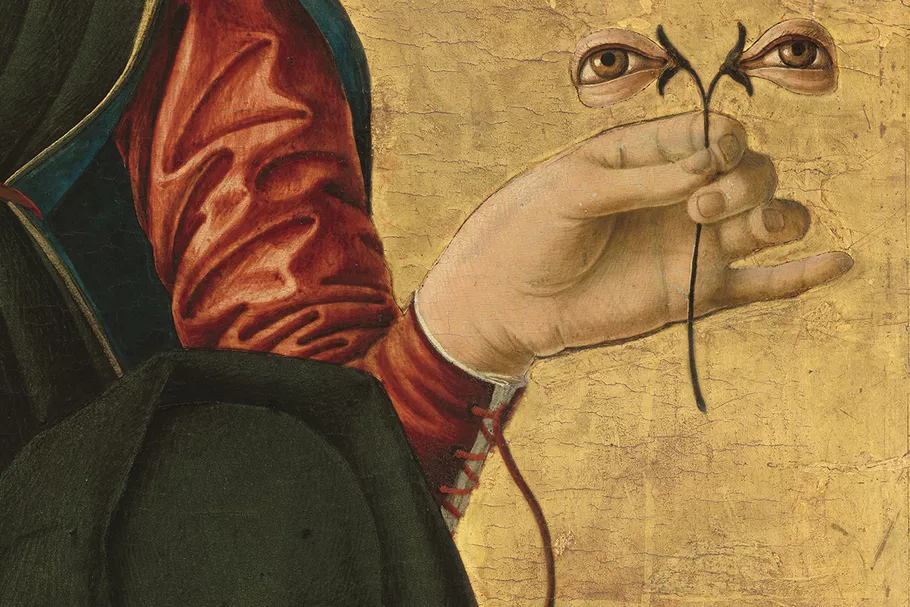
Francesco del Cossa, Saint Lucy, c. 1473/1474
For the 4th Sunday of Advent, the liturgical calendar pivots and invites Catholics to ponder and prepare to receive the mystery of the first coming of Jesus at Christmas.
And it opens with a warning, filled with irony, on what not to do.
It’s taken from the book of Isaiah.
If you are an 80s kid, you might recognize the lyrics from the Swedish group Ace of Base: I saw the sign, and it opened up my eyes.
It makes perfect sense.
If you were unsure of what to do and you saw the sign, your eyes are opened.
Now you are sure.
After all, that’s what we expect signs to do. Provide clarity.
I guess King Ahaz was not a fan of Ace of Base.
God tells him to ask for a sign.
And he tells God:
“Thanks, but no thanks.”
What went unsaid, but was surely on his heart, was this,
“I have made up my mind. I don’t want to open my eyes.”
The Creator of the universe offers clarity. And Ahaz prefers not to take the offer.
St Jerome diagnoses an even deeper problem “He did not want to ask for a sign because he was commanded to do so.” (St Jerome Commentary on Isaiah 3.7.12)
Commanded signs refused to reveal a hardened heart.
We may claim to want to see Jesus and know God’s will.
But be careful. It is very possible that, like Ahaz, we choose to be wilfully blind.
How does wilful blindness occur?
When we say to ourselves, “My will be done”.
And we can even use religion to justify this. As Ahaz did, by claiming a pious intention.
Mother Angelica liked to tell a story about a woman who accompanied a friend to the monastery for a visit. The woman was invited to take some of the nun’s books as a parting gift, but refused the offer, and when Mother asked why, she replied, “If I read them, I know I will have to change, and I don’t want to change.” [1]
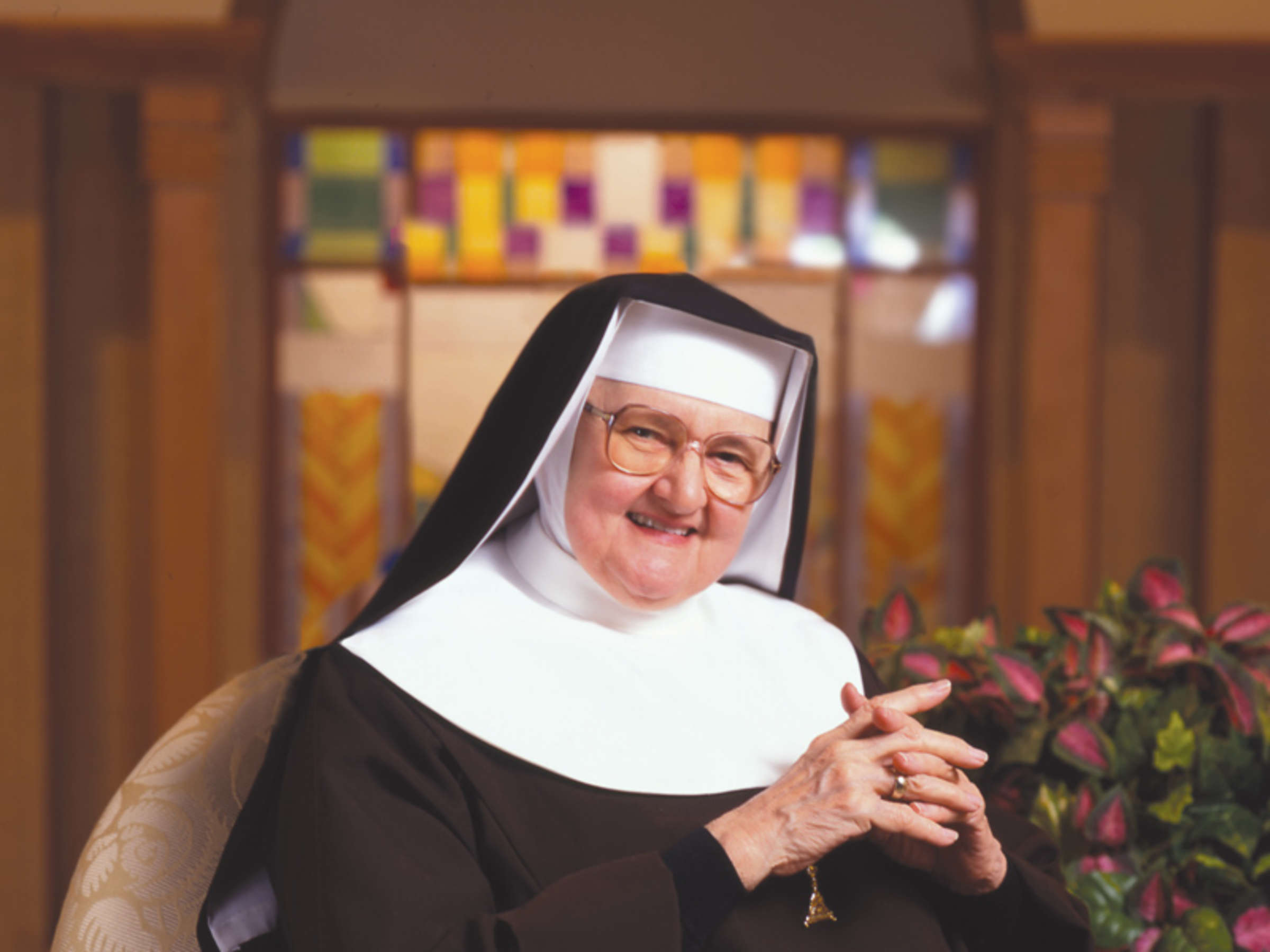
At least that lady was more honest than Ahaz.
The First Reading was a warning.
The Second Reading provides the key attitude that cures wilful blindness. The “obedience of faith” (Romans 1:5)
In today’s world, the word obedience often has negative connotations.
It is often associated with servility or being a bootlicker.
But this is completely alien to the Catholic tradition.
The Catechism of the Catholic Church instead teaches that
“To obey (from the Latin ob-audire, to "hear or listen to") in faith is to submit freely to the word that has been heard, because its truth is guaranteed by God, who is Truth itself. With his whole being, man gives his assent to God the revealer. Sacred Scripture calls this human response to God, the author of revelation, "the obedience of faith" [2]
Two things emerge from this.
i) Submission is a free act of the will because it is first a free act of the mind illumined by grace. We desire truth and as the line of the Adoro te Devote reminds us “Truth himself speaks truly or there is nothing true.”
ii) Once we know that God has spoken, the rational response is not simply assent but “with our whole being”. It cannot be a half-hearted response.
God is going to reveal himself through his definitive “sign”, “the maiden is with child and will soon give birth to a son whom she will call Immanuel, a name which means “God-is-with-us.” (Isaiah 7:14)
And the attitude of obedience, desiring truth and desiring to assent to it with our whole being, is the necessary attitude to receive God’s sign.
And nowhere is this illustrated so powerfully in the Gospel reading through the example of Joseph.
Joseph, as the Gospel describes him, was a “man of honour.” (Matthew 1:19)
In other translations, he is described as a “just man”
These interchangeable terms go to the heart of his character.
A just man gives someone what his due is.
An honourable man is what a just man looks like when justice is lived with mercy.
He will take it upon himself not to humiliate someone else, even if he might be legally permitted to do so.
And Joseph now faces a massive test of character.
There was no Angel appearing to him when he first discovered that Mary was with child.
A just man would want to give the other person their side of the story.
And so, it is very likely that he would have asked Mary how it happened.
And Mary would have told him the truth. She conceived a child because the Holy Spirit overshadowed her.
Whether Mary told Joseph everything, or whether she entrusted the mystery to God’s timing, Matthew leaves us in deliberate silence.
What matters is this: Joseph did not yet have divine confirmation.
After hearing this story, Joseph would have been faced with 2 logical possibilities.
Mary is lying.
Mary is telling the truth.
Joseph had known Mary all his life. She was the most virtuous woman he had ever met. It would be completely out of her character to lie about something so serious.
He also knew that as a Jew, miracles were possible. He would have been thoroughly familiar with Isaiah’s prophecy about the maiden with child, and his mind would have raced to this.
Christian tradition down the centuries is split on this.
Some have said that Joseph doubted what Mary said.
While others insist that Joseph believed her fully.
Both traditions agree, however, that it was a lot to take in.
When faced with such life-changing news, he had no supernatural revelation.
Only the words of another human being, beseeching him to believe her.
And as a just and honourable man, he acted.
For those in the “doubt” school, Joseph acted honourably because it would be wrong to convict someone in the face of reasonable doubt.
And knowing Mary’s impeccable character, there was ample room for reasonable doubt.
Subjecting her to a public trial, however, would be devastating and may end with the possibility of her being convicted of adultery.
He was not willing to do this.
Hence, his choice of an informal divorce.
For those in the “believe” school, Joseph acted honourably because Mary was the recipient of a massive revelation on the scale of the greatest miracles that the God of Israel had performed.
And he was not informed.
He felt unworthy. Who is he to stand in the way of God’s plans? The best thing to do is to step away quietly.
Regardless of where you fall on the attitude of Joseph, Matthew’s Gospel was clear, “he had made up his mind to do this” (Matthew 1:20)
He made up his mind to do the right thing even without special revelation.
For a just man, anxious to give God the obedience of faith, normal human signs — conscience, character, moral law, and charity — are often enough to show you the right path.
If the almighty does not wish to shed more light through a private revelation but leaves you only with human realities to discern his will, you are obedient.
And do not demand a sign.
The Gospel tells us the rest of the story
“Joseph, son of David, do not be afraid to take Mary home as your wife” (Matthew 1:20)
Joseph had resolved to do the right thing without special revelation.
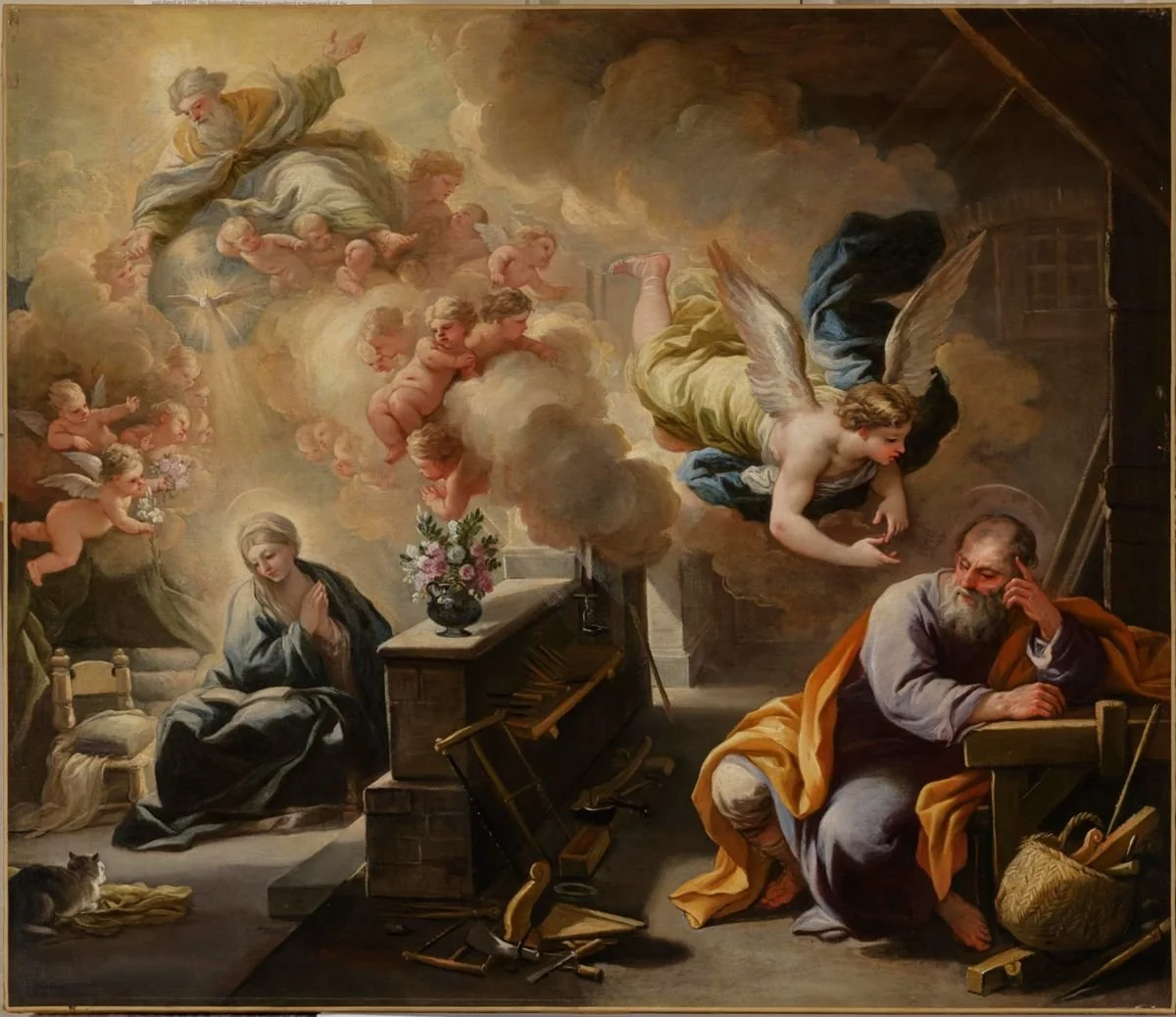
The Dream of St. Joseph c. 1700 by Luca Giordano (Italian, 1632–1705)
And the Angel reminds him of who he is
“Son of David”
A member of the royal family.
And God has a mission for him.
‘She will give birth to a son, and you must name him Jesus, because he is the one who is to save his people from their sins.’ (Matthew 1:20)
When presented with a human sign, it was enough for Joseph to do the right thing.
And because of his initial decision, he received mission clarity. To be the guardian of God’s son in his vocation to save humanity from their sins.
Finally, in this Gospel, we should not forget Mary.
“When Joseph woke up, he did what the angel of the Lord had told him to do: he took his wife to his home.” (Matthew 1:24)
Mary had absolute confidence in God that he would reveal Himself to Joseph in due time.
It is no wonder that the catechism, when discussing the obedience of faith, teaches that “The Virgin Mary is its most perfect embodiment.” (CCC 144)
As we draw closer to Christmas, may we learn from Mary and Joseph to decide to obey even when the path is not entirely clear.
For as Saint John Henry Newman teaches “lead kindly light. I do not ask to see the distant scene; one step is enough for me.” [3]
When we take the first step, which is clear to us, God often shows us other steps that we should take.
And very often, the first obedient step would be the sign that would open our eyes.
[1] https://www.wordonfire.org/articles/fellows/a-sign-high-and-deep-what-is-it-god-wants-of-us/
[2] Catechism of the Catholic Church no 143-144.
[3] https://hymnary.org/text/lead_kindly_light_amid_the_encircling_gl