“Is It Right To Let People Be Wrong?”
Part 3 of 3 of a Theology of Failure
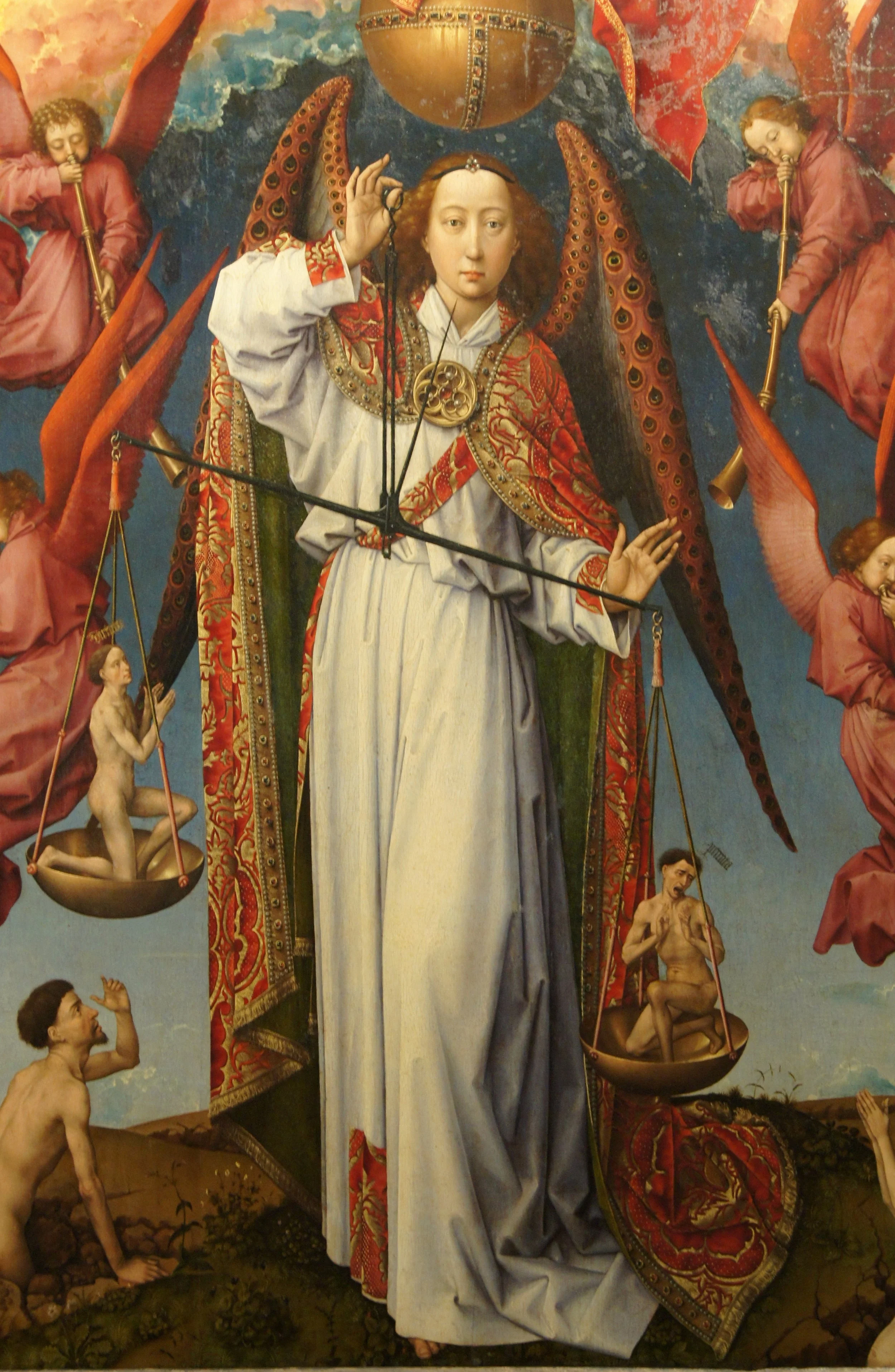
Rogier van der Weyden: The Last Judgment
Why true religion is not a phone number but a jigsaw puzzle.
A popular internet preacher was once asked a seemingly straightforward question: What must a person do to go to heaven?
His answer was equally straightforward: “Be in the true religion.”
To explain, he used an analogy drawn from everyday life.
“If I want to phone you,” he said, “I need your exact phone number. If even one digit is wrong, the call will fail.”
In his view, religions work the same way. Only one is correct, and any deviation — even partial — renders the entire system false.
A religion that gets six out of eight digits “right” is no closer to salvation than one that gets four out of eight, because wrong is wrong.
With stakes this high, the conclusion seems obvious: If you love people, you cannot possibly let them be wrong.
It is a stark and serious vision of truth. And it leaves little room for a “theology of failure.”
But is this how Catholicism understands itself?
1. Correct Answers — and Wrong Analogy
Surprisingly, the Catholic Church says both yes and no.
It is indeed the consistent teaching of the Church that God has entrusted to humanity a “true religion.”
Vatican II states plainly that:
“This one true religion subsists in the Catholic and Apostolic Church, to which the Lord Jesus committed the duty of spreading it abroad among all men.” (Dignitatis Humanae, §1)
There is, in other words, a “correct number.” The Church is not shy about this.
But this is where the phone-number analogy breaks down.
Phone numbers are arbitrary sequences. Knowing the first few digits gives no clue to the next.
Error is catastrophic; one wrong digit and the whole thing collapses.
Religious truth, however, is not an arbitrary sequence of disconnected propositions.
Truths of faith are interconnected, forming a coherent vision of God and the human person.
Someone who grasps even one piece of the truth is already standing on ground illuminated by grace, even if he grasps it imperfectly. Pressing deeper into that truth — however imperfectly — can lead a person toward greater fullness.
2. Truth Seekers vs Answer Seekers
Even more importantly, the manner of seeking matters just as much as the content found.
Here lies a distinction often missed.
Two people may profess the same doctrine but inhabit radically different spiritual attitudes.
One is an answer seeker.
The other, a truth seeker.
Both may say they value truth. But the answer seeker is primarily motivated by security — by the desire to have the correct entry ticket, the “right digits,” the guaranteed outcome.
He is less interested in the journey of understanding than in possessing the correct solutions.
This is the spiritual equivalent of a student content to memorise model essays rather than wrestle with ideas, explore deeper meanings, or risk being wrong.
The truth seeker, by contrast, sees living in truth as a virtue that demands humility, courage, and conversion.
He is unafraid of discovering he was mistaken.
In fact, he welcomes such moments, because each correction is a small conversion, drawing him closer to God.
He wants not just the right answer, but reality itself.
This distinction is why Vatican II insists that:
“Truth is to be sought in a manner proper to the dignity of the human person…The inquiry is to be free, carried on with the aid of teaching or instruction, communication and dialogue, in the course of which men explain to one another the truth they have discovered, or think they have discovered, in order thus to assist one another in the quest for truth. (Dignitatis Humanae, §3)
The quest for truth cannot be coerced.
It must be free, interior, and personal or it is not the quest Christ demands.
3. Why a Person Has the Right to Be Wrong
This may sound strange: How can it be right to give someone the right to be wrong?
Vatican II answers: because men have a “moral obligation to seek truth especially religious truth” and they cannot discharge these obligations in a manner in keeping with their own nature unless they enjoy immunity from external coercion as well as psychological freedom. (DH, §2)
If I force you to profess the right answer, you may gain accuracy — but you lose authenticity.
Your assent is not yours.
The Church points to Jesus Himself as the model:
In attracting and inviting His disciples He used patience. He wrought miracles to illuminate His teaching and to establish its truth, but His intention was to rouse faith in His hearers and to confirm them in faith, not to exert coercion upon them. (DH, §11)
Christ did not fear people’s mistakes. Only a hardened heart.
He walked with them through their misunderstanding until they were ready to see.
This is why a theology of failure is not a contradiction to evangelisation; it is its precondition.
Only the person who is permitted to be wrong can meaningfully choose what is right.
4. From Phone Numbers to Jigsaw Puzzles
If the phone-number analogy is inadequate, is there a better way to picture spiritual life?
I find Fr Dwight Longenecker’s “jigsaw puzzle spirituality” much closer to Catholic truth.
In a pastoral encounter, he once listened to an elderly woman describe her life as shattered and chaotic. Seeing a 1,500-piece jigsaw puzzle on the table, he emptied the box onto the floor.
Shocked into silence, she stared at the scattered pieces.
He said gently, “Your life is like that jigsaw puzzle. It’s all broken down into tiny little pieces and scattered everywhere.” She cried out, “Yes! Yes! You’re right! My life is like that jigsaw puzzle! That’s exactly what it’s like!”
When she cried, acknowledging the truth of it, he continued:
“God is in the business of putting that jigsaw puzzle back together again. He wants to take each piece one by one and carefully, painstakingly put it all back together and he knows exactly what you will look like when you are put back together. He knows that you’re beautiful and good and that you can be healed.”
Father Dwight goes on to share the spiritual lesson:
When we’re broken and shattered by life, that’s when God steps in. When we’ve run out of resources that’s when God takes charge. He works carefully and delicately to fix things. He works behind the scenes – most often doing his best work when we are unaware. All he demands of us is that we sit down at the table and try to do that work of putting it all together with him.
Father Dwight was not directly addressing doctrinal issues. But his jigsaw-puzzle analogy aligns more closely with what the Church teaches about salvation and the religious quest.
Unlike the phone-number analogy, the jigsaw puzzle acknowledges:
• Truth is coherent — each piece relates to the others.
• Error is educational — mismatched pieces teach us what doesn’t belong.
• Growth is gradual — progress comes through trial, patience, and illumination.
• God works behind the scenes — quietly guiding the hand of the seeker.
• Everyone starts with a scattered table — none of us begins with a finished picture.
This is far closer to the Catholic vision of salvation.
God desires all to be saved (1 Tim 2:4), and His grace works through partial truths, imperfect efforts, honest mistakes, and sincere searching.
Hence, the Church can simultaneously proclaim in Lumen Gentium that the Catholic Church is “the pillar and mainstay of the truth." and also that “many elements of sanctification and of truth are found outside of its visible structure. These elements, as gifts belonging to the Church of Christ, are forces impelling toward catholic unity.” (Lumen Gentium §8)
The Catholic Church has the full picture of the jigsaw. It thus has an obligation to share this with others and guide them.
But she also believes that a person beginning with a single piece of truth and striving to put together more pieces may already be at the table with God.
Conclusion: A humbled and contrite heart you will not spurn

Daniel in the Lions' Den (c. 1615) by Peter Paul Rubens
In the third chapter of the book of Daniel, the prophet prays from the heart of the furnace. Acknowledging his wretchedness and that of Israel, exiled in Babylon, he says that:
In our day we have no ruler, or prophet, or leader,
no burnt offering, or sacrifice, or oblation, or incense,
no place to make an offering before you and to find mercy.
Yet with a contrite heart and a humble spirit may we be accepted,
as though it were with burnt offerings of rams and bulls,
or with tens of thousands of fat lambs;
such may our sacrifice be in your sight today,
and may we unreservedly follow you. (Daniel 3: 37-40)
For Daniel, he was confident that in the sight of God, a pure heart can more than make up for the lack of proper ritual and be acceptable to him.
In some way, Daniel’s prayer illustrates the difference between those who cling to answers and those who cling to truth.
It is the difference between the phone-number mindset, which says: “Be right, or be lost,” and the jigsaw puzzle mindset, which says: “Let God assemble you piece by piece.”
What God desires is not perfect accuracy at the start of the journey, but a heart willing to seek Him.
For as the lyrics “Broken Vessels” attest
All these pieces
Broken and scattered
In mercy gathered
Mended and whole
Empty handed
But not forsaken
I've been set free
I've been set free
Amazing grace
How sweet the sound
That saved a wretch like me
I once was lost
But now I am found
Was blind but now I see