When a pre-believer comes to Church, will he find Faith?
(Reflection for the Solemnity of the Epiphany of the Lord Year A)
The nations come to your light and kings to your dawning brightness - Isaiah 60:3
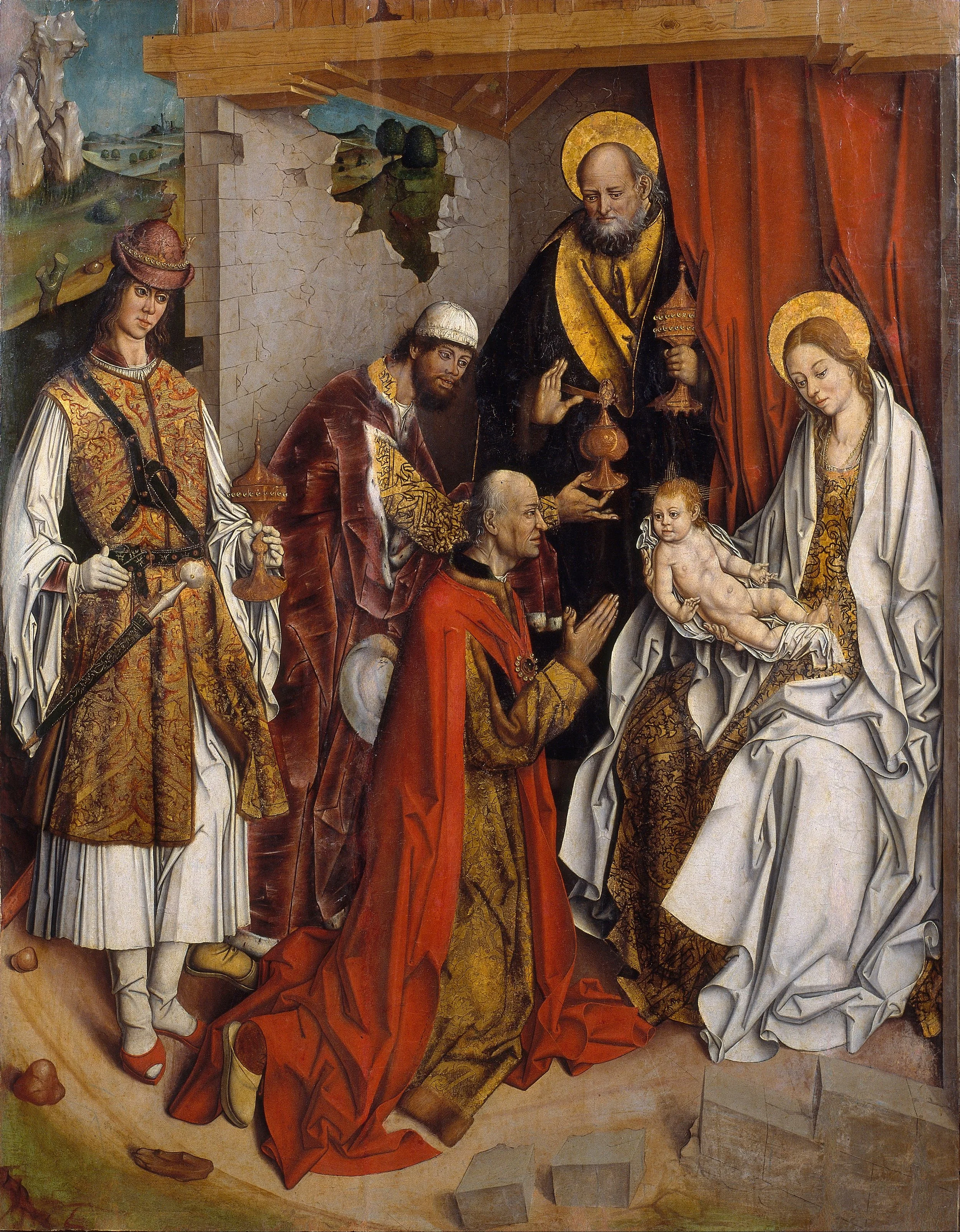
Painting: Epiphany, Fernando Gallego (1440–1507)
The teacher with a passion for astronomy got carried away and went on and on about how the planets Jupiter and Saturn appeared very close together in the sky in 6th BC. And how this was noted in ancient Chinese sources as well as by the famous astronomer Johannes Kepler.
The class jester decided to intervene.
“Sir, everything you said is true right?”
“Of course!” The teacher exclaimed.
“But sir, recess already lah.” He said with a cheeky grin while simultaneously pointing to the clock.
The teacher got the message.
Johannes Kepler might have been a brilliant mathematician.
But for the students, the truth of what he discovered mattered far less than the question: “Why should I care?”
I guess something similar is at work in the Feast of the Epiphany.
There may have been predictions of the birth of the true king of the Jews.
That may indeed be true.
But why should wise men from the East — non-Jews, outsiders — care about something that seemed so ethnic, so provincial, so “not about them”?
And yet they did. As the late Pope Benedict XVI observes:
“all kinds of factors could have combined to generate the idea that the language of the star contained a message of hope. But none of this would have prompted people to set off on a journey unless there were people of inner unrest, people of hope, people on the lookout for the true star of salvation” [1]
In other words, as the Pope teaches, they cared about this particular birth because it was also “the bearer of a salvation destined also for them” [2]
As we examine the readings for the Mass today. We too should ask ourselves.
The birth of Jesus may be historically true.
Christians may care deeply.
But why should anyone else — especially a pre-believer — care at all?
The first reading from the prophet Isaiah paints a picture of Jerusalem being the capital of the world. Everybody from all corners of the world are showing up. “The riches of the sea will flow to you, the wealth of the nations come to you” (Isaiah 60:5)
And the specifically Christmas allusion, which inspired the portrayal of the Magi coming in caravans, can also be found in verse six
“camels in throngs will cover you, and dromedaries of Midian and Ephah; everyone in Sheba will come, bringing gold and incense and singing the praise of the Lord.” (Isaiah 60:6)
The reading does not say why people are doing that. Only that they were doing so.
If you know the historical background of the book of Isaiah, however, you will likely chuckle. Is Jerusalem the capital of the world? The book of Isaiah was written when Israel was far from a superpower. Some biblical scholars even argue that parts of it was written to a people shaped by the experience of forced deportation and exile.
Jerusalem was the conquered capital of an extinct kingdom.
The Babylonian empire, with its capital at Babylon, was the capital of the world, not Jerusalem.
And yet, the prophet dares to encourage Israel to dream.
Not simply that one day, they will be free. Which is of course already an audacious dream.
But that the world will flock to Jerusalem.
But what has Jerusalem to offer the world?
The responsorial psalm gives the answer.
“In his days justice shall flourish and peace till the moon fails. For he shall save the poor when they cry and the needy who are helpless.” (Psalm 72:7, 12-13)
Jerusalem’s “soft power” is not cultural prestige or military might, but justice.
Its export is not J-Pop, but the right ordering of relationships — with God and with one another.
Justice, as the catechism teaches,
“is the moral virtue that consists in the constant and firm will to give their due to God and neighbor. Justice toward God is called the ‘virtue of religion.’ Justice toward men disposes one to respect the rights of each and to establish in human relationships the harmony that promotes equity with regard to persons and to the common good. The just man, often mentioned in the Sacred Scriptures, is distinguished by habitual right thinking and the uprightness of his conduct toward his neighbor” (CCC 1807)
The right ordering of relationships, and the wise application of precepts, is the pearl of great price more precious than brute force. The capital cities of other pagan empires might be built on brute force. But not Jerusalem.
And this becomes a universal vision. People of goodwill would want to come, i.e., “the kings of Tarshish and the sea coasts shall pay tribute, the kings of Sheba and Seba shall bring gifts, before him all kings shall fall prostrate” (Psalm 72:10-11)
This universal vision, sketched out by the Old Testament prophets, made the Jewish people unique. The deepest treasure, as the Jewish people would learn through the experience of the waxing and waning of their political fortunes, is their faith, and they will cling on to it and continue to bear witness, even if they are exiled and deported.
By the time of the appearance of the Magi, the Jewish people were a “known entity” in the ancient world. A stubborn monotheistic people, who even as they face occupiers over the centuries, never cease to worship the One God, and to witness to his justice.
For Gentiles who largely understood the world through the lens of power and politics, Israel might appear at best as a curiosity.
But for wise men — restless, dissatisfied with a world explained only by force — this people may have appeared as custodians of a deeper treasure.
Indeed, Pope Benedict XVI teaches that the second temple of Jerusalem had what was known as the “Courtyard of the Gentiles”, a vast space in the temple complex where non-Jews can congregate and have their questions answered by a Jewish priest or scribe.
He notes in his book Jesus of Nazareth:
“In the layout of the Temple, the vast Court of the Gentiles…is the open space to which the whole world is invited, in order to pray there to the one God [and] to remove whatever obstacles there may be to the common recognition and worship of God—and thereby to open up a space for common worship.” [3]
With this background in mind, it becomes less surprising that the wise men from the east would seek an audience with the man who had spent enormous resources expanding the Temple.
Herod the Great.
Herod was the Roman-endorsed “king of the Jews”. He was not Jewish by blood, but an Idumean convert to Judaism. The renovation of the temple of Jerusalem was one of his pet projects. There was even a saying circulating in those times that “He who has not seen the temple of Herod has never seen a beautiful building”[4]
A friend of the Roman emperor Augustus, and a crafty political leader, he would have considered the Magi of sufficient importance to agree to meet them.
Both parties would have likely looked forward to the meeting with anticipation.
But it got awkward very quickly.
“Where is the infant king of the Jews?’ they asked. ‘We saw his star as it rose and have come to do him homage.’ (Matthew 2:2)
The Magi, non-Jews, were familiar with the biblical prophecies in the Hebrew scriptures about the birth of a righteous king. They had confirmation from a star that the timing of his birth is imminent.
They were not expecting Herod’s reaction.
“When King Herod heard this, he was perturbed, and so was the whole of Jerusalem.” (Matthew 2:3)
The great renovator of the Second Temple was ignorant of the prophecies that were the heart of Jewish “soft power.”
What the wise men announced was (disturbing) news to him.
He scrambled and demanded an information brief from his officials.
“So he called together all the chief priests and the scribes of the people and enquired of them where the Christ was to be born.” (Matthew 2:4)
They presented Micah’s prophecy to him:
And you, Bethlehem, in the land of Judah,
you are by no means least among the leaders of Judah,
for out of you will come a leader
who will shepherd my people Israel.’ (Matthew 2:6)
The religious elite of the time knew of one of the most important topics in the Jewish mind, namely, the birth of the Messiah. But they never felt that it was worthwhile or safe, to share it with Herod.
Until they were compelled by him.
Herod would subsequently meet the wise men again. Matthew reports it in the following manner.
Then Herod summoned the wise men to see him privately. He asked them the exact date on which the star had appeared and sent them on to Bethlehem.
‘Go and find out all about the child,’ he said, ‘and when you have found him, let me know, so that I too may go and do him homage.’ (Matthew 2:7-8)
We can imagine the conversation and gossip among the Magi after their meeting. Balthasar may have said to Melchoir, “The guy seemed not to know anything about the prophecy. He seemed only eager to talk about the quality of the stone used for the renovations”
Melchior might have replied.
“Yes, I found that strange too. I also noticed that when we mentioned the prophecy, his face changed. He was trying to contain his emotions, but I detected a flash of anger. While he smiled and said that he would check in with his scholars and thanked us for the information, I wasn’t convinced of his sincerity.”
Caspar might have interjected,
“Perhaps we ought not to be too cynical. I was also surprised. But I was encouraged that he also wanted to pay the new infant king homage. I think it was probably a face thing. When he spoke to us privately, he seemed sincere.”
We know the outcome of their (imagined) conversation. They received divine aid in discerning Herod’s true motives after their visit to the infant king.
“But they were warned in a dream not to go back to Herod and returned to their own country by a different way.” (Matthew 2:12)
Their shock was now complete. But so was their fulfilment. They worshipped the infant king and presented their gifts. The scandal of the temple builder being, in reality, an evil man, was not enough to take away their joy.
They are no longer the same. They will return to their own country “by a different way”.
Restless hearts.
Sincere seekers of the truth.
Finding scandal and depravity.
But also the joy which no one can take away.
Why does the story of Epiphany have such a contemporary ring? What lessons can we draw as Christians?
We can do that by examining the three characters in the Gospel account.
Herod, the religious leaders and the wise men.
Firstly Herod.
He puts on a big show of religious patronage. The externals of religion must be impressive. It should attract attention.
People are attracted.
They came for truth and wisdom.
But they discover ugliness.
An inability to have faith conversations. An obsession with power and position. Murderous intent towards perceived threats.
He is whom Nietzsche would describe “human all too human”
Lesson one.
Ask ourselves. Do we as a Church imbibe “Herod-like” attitudes?
Are we the proudest of buildings and institutions?
Are we obsessed only with the externals? And are at heart uninterested with what is at the heart of our faith. What Paul describes in the letter to the Ephesians as “the mystery that has now been revealed through the Spirit to his holy apostles and prophets” (Ephesians 3:3) does not interest us. We pay at best lip service to that.
Do we find ourselves more interested in power and position than in the mystery entrusted to us?
Secondly, the religious leaders.
They know that they are stewards “entrusted by God with the grace he meant for you” (Ephesians 3:2).
But they have been orbiting around the circles of power for too long. And have deliberately taken the edge off the Gospel in order to gain favor.
Or as Pope Benedict XVI notes:
“it is remarkable that his [Herod’s] Scripture experts do not feel prompted to take any practical steps as a result. Does this, perhaps, furnish us with the image of a theology that exhausts itself in academic disputes.”[5]
Lesson Two.
Ask ourselves. All of us with knowledge of the faith, have we choked the word in the name of mere human respect?
Finally, the wise men.
They were restless seekers. Prepared to pour resources (gold), worship (frankincense) and possibly even at the cost of their lives (myrrh) in the pursuit of truth.
Scandal does not deter them. It makes them even more determined to be the custodians of the mystery.
Because they have found Him whom the star has pointed to.
Lesson Three.
Ask ourselves, amid scandal and hypocrisy, are our eyes still fixed on the star? And are we still determined to “open up our treasures” for Him?
The feast of the Epiphany asks not only whether Christ is revealed to the nations, but whether the Church is transparent enough for that revelation to be seen.
For at the heart of the feast of the Epiphany is the following claim.
Jesus Christ is universally relevant.
And because this infant was whom the Magi believed him to be, then justice, mercy, and truth are not illusions — they are grounded in reality.
As such, let us not be a stumbling block for others. But instead, be stewards who are eager to share the same inheritance as us.
[1] Benedict XVI Jesus of Nazareth the infancy narratives (New York: Image, 2012) pg 95.
[2] Ibid p 92.
[3] https://www.catholicculture.org/commentary/courtyard-gentiles/
[4] https://www.catholic.com/magazine/print-edition/death-dynasty
[5] Jesus of Nazareth, the infancy narratives pg 105.